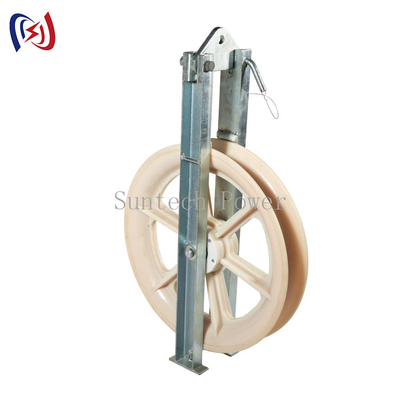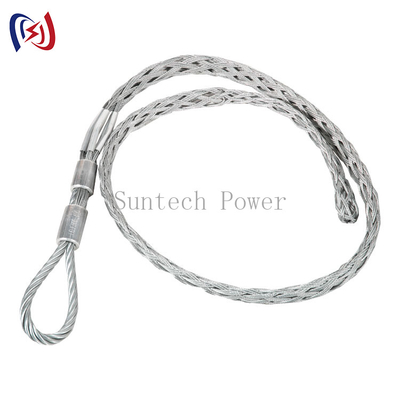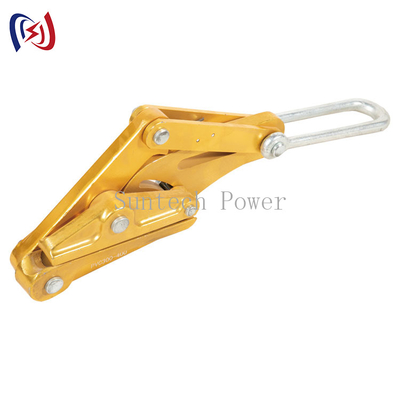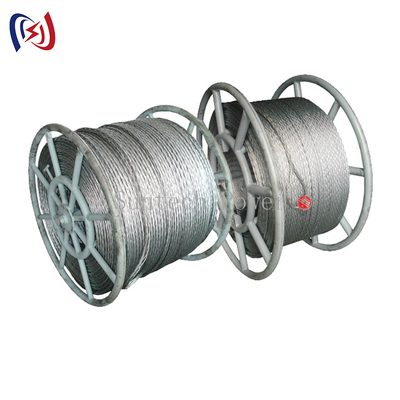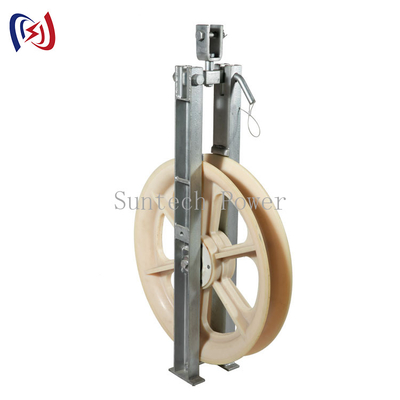
25KN Tandem Sheave Stringing Block for Large Section ACSR Conductors LGJ300-500
The Tandem Sheave Stringing Block is specially designed for stringing conductors of large cross section area. Used before and after double, increasing the contact area of the wire with wheel groove through which various connectors can pass. Apply to leading and pull large section conductor; splicing sleeve can pass through from the groove. Particularly suitable for big angle or corner conditions on transmission lines.
|
Item Number |
Model |
Applicable Conductor |
Rated Load (kN) |
Weight (kg) |
Remark |
|
10211 |
SHR-2.5 |
LGJ300-500 |
25 |
11 |
Aluminum Sheave |
|
10212 |
SHRN-2.5 |
LGJ300-500 |
25 |
9.5 |
Nylon Sheave |
· Stringing large cross section conductors (LGJ300-500)
· Big angle and corner transmission line stringing
· Leading and pulling large section conductors
· Splicing sleeve pass-through applications
· Heavy duty transmission line construction
· Increased Contact Area — Tandem sheave design doubles wire contact area, reducing pressure on conductors and preventing damage.
· Connector Pass-Through — Various connectors and splicing sleeves can pass through the groove without obstruction.
· Large Conductor Capacity — Specifically designed for LGJ300-500 large cross section ACSR conductors.
· Big Angle Capability — Ideal for big angle and corner stringing conditions where standard blocks cannot perform.
· Dual Material Options — Aluminum sheave for maximum durability; nylon sheave for lighter weight and cable protection.
· Heavy Duty Construction — 25KN rated load capacity for the most demanding transmission line projects.
Q: What is the advantage of tandem sheave design?
A: Two sheaves in tandem increase the contact area with the conductor, reducing pressure and allowing smoother pulling with less cable damage.
Q: Maximum conductor size?
A: LGJ300-500 large cross section ACSR conductors.
Q: Can splicing sleeves pass through?
A: Yes, the grooves are designed to allow splicing sleeves to pass through.
Q: What applications?
A: Big angle and corner stringing conditions, large conductor transmission projects.
Q: Weight difference?
A: Aluminum version 11KG, nylon version 9.5KG.