In the critical infrastructure of urban power distribution, the transition from overhead lines to underground cabling has introduced new technical challenges for EPC (Engineering, Procurement, and Construction) companies. Among these, the most significant risk is the mechanical damage to the cable jacket during the pulling process. For B2B procurement managers and site engineers, understanding why a 5KN rated ground roller is the industry standard for protection is vital for long-term grid reliability.
1. The Critical Role of Load Capacity in Cable Integrity
During underground cable installation, the "pulling tension" is the primary force that can compromise a cable's structural integrity. A ground roller with a certified 5KN (510kg) rated load ensures that the support structure does not buckle or deform under the weight of heavy-duty power cables.
-
Structural Support: When a 110kV or higher voltage cable is pulled through a trench, the downward force exerted on each roller is immense. A 5KN capacity ensures that the Steel Pipe or Cast Aluminum carrier remains stable, keeping the cable at a constant height above the abrasive ground surface.
-
Friction Management: Without the 5KN load rating, a standard roller might seize or collapse, turning a low-friction rolling surface into a high-friction drag point, which leads to immediate jacket scarring or "burn-through."
2. Preventing Jacket Damage: The Synergy of Material and Design
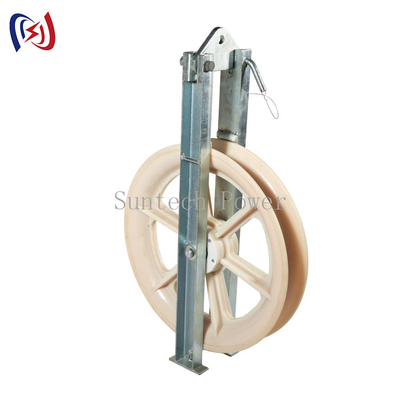
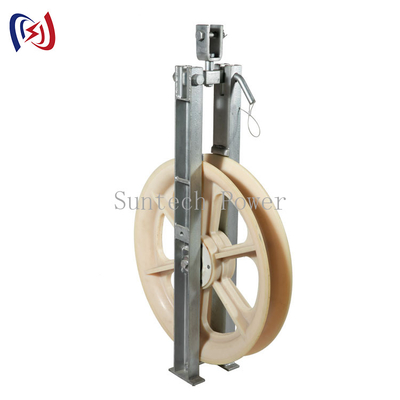
Urban grid retrofit projects often involve navigating tight corners and varying elevations. The SHL Series rollers prevent cable sheath damage through specific engineering choices:
Nylon vs. Aluminum Sheaves
The choice between Nylon (N-type) and Aluminum sheaves is a strategic one. Nylon sheaves are preferred for their lower coefficient of friction and softer contact surface, which is ideal for protecting sensitive cross-linked polyethylene (XLPE) cable jackets. Aluminum sheaves, on the other hand, offer superior heat dissipation and wear resistance for high-speed pulling operations.
Shielding Large Diameter Cables
With the capability to handle cable diameters up to 200mm, these rollers feature deep-groove designs. This ensures that even under lateral tension, the cable remains centered, preventing it from slipping off the roller and striking the sharp edges of the trench or concrete duct.
3. Engineering Selection Guide: Beyond the Load Rating
When selecting a guide roller for a specific urban project, engineers must look beyond the 5KN figure and consider the following "stability" benchmarks:
-
Carrier Weight and Portability: A roller weighing between 3.3kg and 8.5kg allows for rapid deployment by a small crew. In congested urban sites, the ability to manually reposition a high-load-capacity tool without heavy machinery is a significant operational advantage.
-
Environmental Resilience: Underground environments are often muddy or corrosive. Professional-grade rollers utilize specialized bearings that are sealed against dust and moisture, ensuring that the 5KN rated performance remains consistent over thousands of meters of cable pulling.
4. Conclusion: A Small Investment in Grid Longevity
Investing in standardized 5KN cable ground rollers is not merely a purchase of hardware; it is an insurance policy against the catastrophic failure of underground power links. By maintaining a low-friction, high-load-bearing path, these tools ensure that the cable reaches its final position in the same condition it left the factory—defect-free and ready for decades of service.


 Your message must be between 20-3,000 characters!