In the high-stakes world of electrical and communications line construction, efficiency is not merely a goal—it is the competitive edge that determines profitability and project viability. This is especially true across the vast and challenging landscapes of Central Asia, the Middle East, Africa, South America, and Southeast Asia, where projects span immense distances, tackle extreme terrain, and operate under tight schedules. For decades, crews have orchestrated the intricate dance of (tower erection), (cable pulling/stringing), (tensioning), and (cable laying) using an arsenal of single-function tools, a process often requiring multiple machines, complex setups, and significant labor coordination. Now, a paradigm shift is underway, championed by a machine designed to consolidate power and precision: the Double Drum Winch.
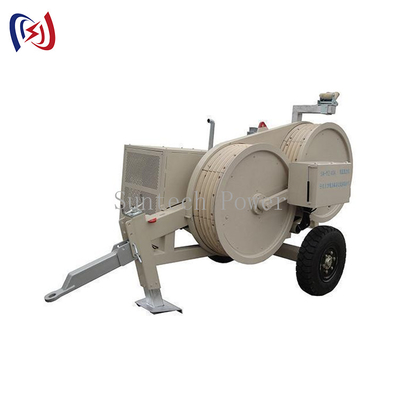
Far more than two winches bolted together, the modern Double Drum Winch is an integrated system engineered for simultaneous, independent, or sequenced operations. It represents a leap in operational intelligence, directly addressing the industry's most persistent pain points: logistical complexity, operational downtime, and the need for synchronized force in critical lifting and pulling tasks. For project managers and contractors, it transforms the job site from a collection of discrete tasks into a streamlined, continuous workflow.
Engineering Synergy: The Anatomy of a Dual-Force System
The core value of the Double Drum Winch lies in its sophisticated engineering, which allows two powerful drums to operate in concert from a single power plant and control station. Each component is designed for both individual strength and harmonious interaction.
-
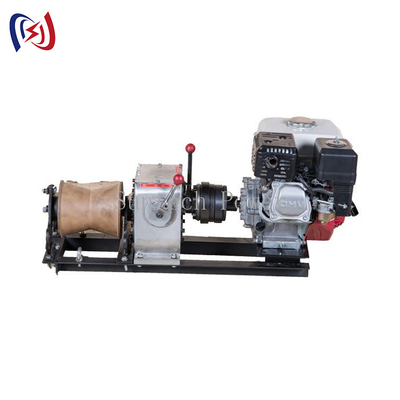
Unified Power Plant & Advanced Drivetrain: At its heart is a single, high-torque diesel engine, chosen for global fuel availability and durability. This engine powers a heavy-duty, multi-speed transmission—often with power-shift capabilities. The critical engineering feat is the power divider or transfer case. This component, built with hardened gears and high-capacity bearings, seamlessly and reliably directs power to two independent output shafts, one for each drum. This allows each drum to be powered, disengaged, or even operated in opposite directions simultaneously, all from a single prime mover. This consolidation drastically reduces fuel consumption, maintenance points, and on-site footprint compared to operating two separate winches.
-
Independent Drum Assemblies with Precision Control: Each drum is a self-contained powerhouse. They feature wide, machined flanges for optimal cable spoiling, and are constructed from high-grade steel to withstand massive radial loads. The drums are mounted on a common, massively reinforced chassis to handle asymmetric loads. Each is equipped with its own, multi-disc hydraulic fail-safe brake system, allowing one drum to be locked securely under full load while the other operates. The control system is the brain of the operation. Modern Double Drum Winches feature independent controls for each drum, often with joystick or digital interface panels. Operators can control line speed, direction, and pull force for each drum with millimetric precision, enabling complex, coordinated maneuvers.
-
Integrated Tensioning & Measurement Systems: For tasks like (tensioning), precise force measurement is non-negotiable. Advanced models integrate load cells or inline tension meters on each drum’s fairlead system. This provides real-time, digital feedback of the exact pulling or holding force on each line, allowing crews to tension multiple conductors simultaneously to exact specifications or maintain a precise counter-tension during complex pulls.
-
Modular Design for Enhanced Versatility: The most adaptable Double Drum Winches are designed with modularity in mind. Some systems allow drums to be spooled with different cable types (e.g., steel messenger line on one, fiber-optic cable on the other) or configured for different speed/torque ratios. Quick-change fairleads and guide rollers further enhance adaptability to various cable diameters and job requirements.
Transforming Project Execution: Real-World Applications and Solutions
The Double Drum Winch excels by solving specific, high-cost problems across the entire line construction lifecycle, turning logistical challenges into streamlined operations.
-
Application 1: Efficient Tower Erection in Confined or Remote Areas: Erecting lattice towers often requires a "gin pole" or derick setup, where one line lifts the tower section while a second, opposing tag line controls its swing and position. Traditionally, this requires two winches, two operators, and perfect communication. A Double Drum Winch allows a single operator to control both the main hoist and the tag line from one station. The synchronized control enables smooth, safe lifts with immediate adjustment, reducing crew size, setup time, and the risk of miscommunication accidents, especially valuable in mountainous or forested terrain.
-
Application 2: Simultaneous Stringing and Tensioning for High-Voltage Lines: In a standard "pull-pay" stringing operation for multiple conductors, one set of lines (the pull line) is drawn in while the old pilot line is retrieved. With a Double Drum Winch, one drum performs the heavy pull of the new conductors, while the second drum simultaneously re-spools the retrieval line under controlled tension. This continuous, closed-loop operation eliminates the downtime of rewinding lines between pulls, dramatically accelerating the stringing process for multi-bundle transmission lines, a common sight in grid expansions across Africa and South America.
-
Application 3: Balanced Pulling and Cable Laying in Sensitive Environments: When laying submarine cables or pulling heavy cable through long, congested urban ducts, maintaining a balanced tension is critical to prevent damage. One drum can be used to pull the cable from the supply barge or reel, while the second drum pays out a counterweight or a separate balancing line. This "tension-balanced" pull, precisely managed from one control point, minimizes stress on the cable, prevents snagging, and protects sensitive duct infrastructure. This is crucial for projects in environmentally sensitive deltas in Southeast Asia or beneath historic city centers.
-
Application 4: Rapid Deployment for Emergency Restoration: Following storms or outages, speed is critical. A Double Drum Winch mounted on a service truck can function as a complete, self-contained repair station. One drum can be used to remove a damaged conductor or cable, while the other simultaneously installs the replacement, cutting restoration time in half—a vital capability for utilities in regions prone to extreme weather, like the typhoon belts of Asia or the storm corridors of the Americas.
The Strategic Advantage: Quantifying the Dual-Drum Benefit
The decision to deploy a Double Drum Winch is driven by clear, bottom-line advantages that address the core economics of construction in challenging markets:
-
Dramatically Reduced Operational Costs: One engine, one operator, one transport unit replacing two (or more) of each. This consolidation slashes fuel, labor, maintenance, and logistics costs.
-
Accelerated Project Timelines: The elimination of setup/swap time between tasks and the ability to perform operations simultaneously (like pull and re-spool) can reduce critical path duration by 30% or more.
-
Enhanced Safety and Control: Centralized control of multiple lines by a single operator reduces communication errors and improves coordination during complex, high-risk lifts and pulls. Independent braking on each drum provides fail-safe security.
-
Superior Precision for Quality: Independent control and integrated tension measurement enable unmatched precision in synchronized tensioning, ensuring all conductors in a bundle are set to identical specs, which is fundamental for long-term grid stability and performance.
-
Unmatched Job Site Versatility: A single machine capable of handling the primary force applications for tower work, stringing, and laying makes fleet management simpler and capital investment more efficient, especially for contractors operating over vast geographic areas with diverse project needs.
Conclusion: The New Standard for Efficient Infrastructure Development
As nations across the target regions invest heavily in energy transition and digital connectivity, the pressure to build reliable infrastructure faster and more efficiently has never been greater. The Double Drum Winch is not an incremental improvement; it is a re-engineering of the heavy-lift and pull workflow. It moves beyond being a mere tool to become a centralized power and control hub for the most physically demanding phases of line construction.
For the utility engineer in Saudi Arabia managing a high-capacity transmission line, the subsea contractor in Indonesia, or the rural electrification team in the Andes, the Double Drum Winch offers a tangible solution to the twin challenges of complexity and cost. It embodies the next generation of construction philosophy: doing more with less—less equipment, less time, less risk, and less fuel—to deliver more: more reliability, more capacity, and more connected communities. In the relentless drive to power progress, the twin drums are setting a powerful new rhythm.


 Your message must be between 20-3,000 characters!