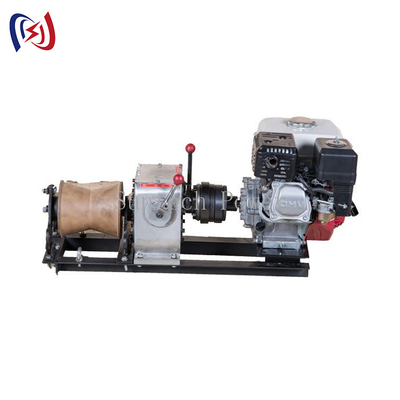
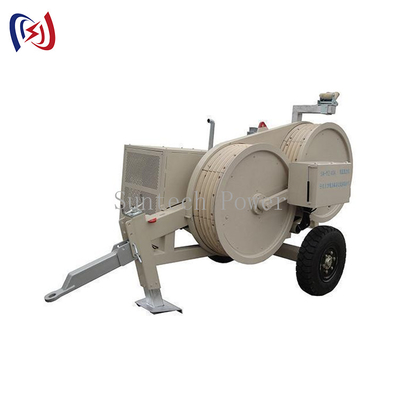
Across the rugged terrains of the Andes, the expansive steppes of Central Asia, the demanding landscapes of the Middle East, and the remote sites of Africa and Southeast Asia, the challenge of moving heavy loads vertically and horizontally is a constant. For teams engaged in critical infrastructure work—particularly those utilizing specialized tools like High Altitude Crimping Tools for aerial electrical systems—efficiency, safety, and raw pulling power are non-negotiable. While the crimper ensures the integrity of the connection in the air, another piece of equipment ensures that cables, transformers, and essential materials can even reach that height safely and efficiently: the Power Winch. Often overlooked in favor of more glamorous machinery, the power winch is a fundamental force multiplier, transforming impossible manual tasks into controlled, mechanical operations. This article delves into the world of power winches, explaining their types, core applications, and critical selection factors for procurement teams operating in challenging global markets.
Beyond the Basic Pull: Understanding Power Winch Types and Mechanics
A power winch is not merely a motorized spool of cable. It is a calibrated system of mechanical advantage, combining a motor, a gear train, a drum or capstan, and a braking system. For professionals, selecting the right type is the first and most crucial step. The primary categories are defined by their power source and configuration:
-
Electric Winches: Powered by DC (battery) or AC (grid/generator) electrical systems.
-
Best For: Applications with access to reliable power, such as fixed installations, service trucks with robust alternators, or sites with generator support. They are prized for their precise control, ease of use, and relatively quiet operation. Ideal for repetitive, short to medium-length pulls in telecommunication tower setups or confined substation upgrades.
-
Considerations: Pulling capacity diminishes as battery voltage drops. Requires cables and circuits rated for high amperage. Not typically suited for continuous, high-duty operations without significant power infrastructure.
-
Hydraulic Winches: Powered by a hydraulic system, typically tapped from a vehicle's power-take-off (PTO) or a dedicated hydraulic power pack.
-
Best For: The most demanding, continuous-duty applications. They offer sustained high pulling power, excellent heat dissipation, and the ability to operate under load for extended periods without overheating. The definitive choice for heavy cable stringing over long distances, pulling large transformers into place, or recovery operations in the oil & gas fields of the Middle East or mining sites in South America.
-
Considerations: More complex installation requiring hydraulic lines, pumps, and reservoirs. Potential for fluid leaks. Generally heavier and more expensive initially than electric counterparts.
-
Capstan Winches (Air or Electric): These winches do not store cable on a drum. Instead, they use a rotating vertical capstan (head) around which a rope is wound 3-5 turns. The operator controls the pull by managing the rope's tail end.
-
Best For: Specialized applications requiring infinite cable length, such as vertical lifts up towers or derricks, or horizontal pulls where the distance exceeds any practical drum capacity. They are lightweight, offer excellent control, and are commonly used in conjunction with synthetic ropes for pulling communication cables or lifting tool cages.
-
Considerations: Requires a skilled operator for safe handling of the tail rope. The pulling action is not self-storing; the cable or rope must be managed separately.
The Procurement Blueprint: Selecting a Winch for Real-World Conditions
For a project manager in Kazakhstan overseeing a wind farm grid connection, a utility contractor in Vietnam installing new transmission lines through jungled hills, or a telecom team in Angola erecting a tower, winch selection is a strategic decision. Here is a field-focused evaluation framework:
-
Define the Core Mission: Load, Line, and Frequency.
-
Rated Load Capacity: This is the maximum force the winch is designed to exert. Rule: Your working load limit(the typical maximum you'll pull) should be at 50-75% of the winch's rated capacity. This provides a crucial safety buffer for startup friction, uneven terrain, and unexpected snags. Never spec a winch that matches your maximum load exactly.
-
Line Pull Speed and Duty Cycle: How fast do you need to pull? A hydraulic winch may pull a heavy load slowly but steadily all day. A light electric winch may pull faster but needs frequent cool-down breaks. Match the duty cycle (continuous vs. intermittent) to your operational tempo.
-
Cable/Drum Capacity: The length and diameter of the cable it can hold. For long pulls (e.g., stringing conductor over a valley), this is paramount. Synthetic rope on a capstan winch can be a game-changer for ultra-long, lightweight pulls.
-
Prioritize Safety and Control Systems:
-
Braking: This is non-negotiable. A fail-safe automatic brake that holds the load if power is lost is essential for any vertical or inclined lift. A separate, manually controlled braking system for controlled lowering is equally critical.
-
Control Interface: Remote control capability (wired or wireless) is a massive safety and operational advantage. It allows the operator to stand clear of the cable, drum, and load, observing from the safest vantage point. Look for intuitive, robust controllers.
-
Overload Protection: Systems that cut power or provide an audible/visible warning when nearing capacity prevent catastrophic gear or motor failure.
-
Evaluate for Environmental and Operational Resilience:
-
Ingress Protection (IP) Rating: For operations in the humid climates of Southeast Asia, the dust storms of the Middle East, or the variable conditions of African savannas, a high IP rating (e.g., IP67) for water and dust resistance is mandatory to protect internal components.
-
Construction and Corrosion Resistance: Look for winches with sealed gearboxes, corrosion-resistant coatings (hot-dip galvanized, powder-coated), and stainless steel fasteners. Salt air, industrial pollution, and constant UV exposure will degrade poorly protected equipment rapidly.
-
Mounting and Integration: Consider how it will be deployed. Is it a permanent mount on a dedicated vehicle? A skid-mounted unit for quick deployment from a flatbed? A portable unit that can be anchored to the ground or a structure? The mounting solution must be as robust as the winch itself.
-
Consider Total Cost of Ownership in Remote Locations:
-
Serviceability and Parts Availability: In remote areas of South America or Central Asia, ease of maintenance is key. Can common service tasks (greasing, seal replacement) be done in the field with standard tools? Is there a local distributor or a clear supply chain for spare parts (motors, solenoids, contactors)?
-
Power Compatibility: For electric winches, ensure the voltage (12V/24V DC, 110V/220V/380V AC) and phase match your regional power standards and available site generators.
Synergy in the Field: The Winch and the High-Altitude Workflow
The connection between a power winch and a high-altitude crimping tool is a direct one in the workflow sequence. The winch performs the macro-task: it lifts the heavy reels of conductor cable to the base of the tower, tensions the new line between structures, or hauls up a tool cage containing the technicians and their equipment—including their specialized crimpers, lugs, and dies. Once the cable is secured at height, the technician then performs the micro-task: using the high-altitude crimping tool to make the perfect, reliable, and safe electrical connection. One tool moves the mass, the other perfects the connection. Both are indispensable for a safe, efficient, and high-quality outcome.
Conclusion: Investing in Foundational Capability
A power winch is an investment in foundational operational capability. It expands what a crew can accomplish, reduces physical strain and injury risk, enhances precision in material placement, and most importantly, creates a safer working environment by replacing unpredictable manual hauling with controlled mechanical force. In the demanding contexts of developing global infrastructure, it is not merely a tool but a productivity engine.
To explore a range of power winches engineered for the specific demands of remote and aerial operations—from compact electric models for telecom work to heavy-duty hydraulic systems for grid construction—detailed specifications, configuration guides, and duty cycle charts are available for your review. Visit our main website to access comprehensive technical resources that can help you specify the right pulling solution for your next project.
Empower your teams to move the weight of progress, safely and efficiently. The right winch transforms a logistical challenge into a routine procedure. Begin the process of enhancing your team's core lifting and pulling capabilities by exploring the proven solutions portfolio on our homepage today.


 Your message must be between 20-3,000 characters!