logo

Hydraulic Column Type Cable Reel Stands: Precision and Power for Modern Cable Pulling Operations

December 9, 2025

Latest company news about Hydraulic Column Type Cable Reel Stands: Precision and Power for Modern Cable Pulling Operations
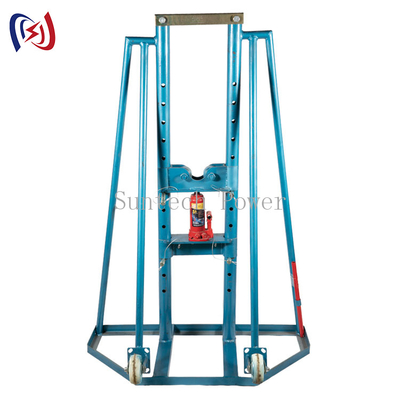
In the complex and demanding world of cable and wire installation, efficiency, safety, and adaptability are not just advantages—they are necessities. The Hydraulic Column Type Cable Reel Stand represents a significant technological evolution in cable handling equipment, specifically designed to address the challenges of managing heavy, large-diameter reels in diverse and often challenging work environments. This equipment category utilizes integrated hydraulic systems to provide controlled, effortless lifting and precise height adjustment of cable reels, fundamentally transforming the workflow for electrical contractors, utility companies, and telecommunications crews.
For professionals operating in regions like Central Asia, the Middle East, Africa, South America, and Southeast Asia—where projects range from expansive desert solar farms and dense urban grid upgrades to remote mountainous transmissions lines—the ability to handle heavy loads with precision and reduced physical strain is paramount. This guide delves into the engineering, applications, and selection criteria for hydraulic column reel stands, offering a detailed, objective analysis aimed at informing procurement and operational decisions for international infrastructure projects.
To understand the full technical specifications and model variations of modern hydraulic cable reel stands, we recommend visiting the main equipment section of our website for comprehensive documentation and support materials.

Core Engineering: The Hydraulic Advantage in Cable Handling

Fundamental Operating Principle
At its heart, the hydraulic column stand replaces mechanical cranks, winches, or manual labor with a fluid-powered system. A hydraulic pump—often manually operated via a lever or powered electrically/pneumatically—forces fluid into a vertical hydraulic cylinder. This controlled pressure extends the cylinder's piston, smoothly and steadily lifting the reel-holding axle and the massive cable reel it supports. The system’s inherent design allows for precise control over the lifting process and, crucially, enables secure locking at any intermediate height.
Key Mechanical Subsystems and Benefits
  1. The Lifting Column & Cylinder:​ The central load-bearing component. Its robust construction ensures stability under extreme loads, while the sealed hydraulic mechanism within protects against dust, moisture, and debris—a critical feature for projects in arid, coastal, or muddy environments common in many target regions.
  2. The Power Unit (Pump & Reservoir):​ This is the "heart" of the system. Manual pumps offer reliability and independence from external power sources, ideal for remote sites. Electric or petrol-driven pumps provide rapid lifting for high-productivity urban sites. The reservoir holds the hydraulic fluid, and integrated valves control the direction and pressure of the flow.
  3. Load-Bearing Axle and Supports:​ Engineered to engage the core of the cable reel securely. These components are typically constructed from high-tensile steel and feature safety locking pins or plates to prevent accidental disengagement during cable payout.
  4. Stabilizing Base Frame:​ Provides a wide, stable footprint to counteract the significant torque and weight shifts during cable pulling. Many models feature optional outriggers or mobile wheel assemblies for repositioning.
The Height Adjustment Imperative
The ability to adjust reel height is not a mere convenience; it is a critical factor for operational efficiency and cable integrity. Proper height alignment:


Strategic Applications: Where Hydraulic Column Stands are Indispensable

High-Capacity Power Transmission & Distribution
Telecommunications and Fiber Optic Networks
Heavy Industrial and Infrastructure Projects
For project engineers planning such large-scale infrastructure work, evaluating the capabilities of hydraulic reel stands is a crucial step. Detailed application case studies and load capacity charts are available for review on our product information portal.

Procurement Analysis: A Buyer’s Guide for the International Market

Selecting the right hydraulic column stand requires a careful assessment of technical, operational, and commercial factors tailored to your typical project profiles.
1. Performance and Technical Specifications:
2. Durability and Regional Suitability:
3. Operational and Safety Features:
4. Total Cost of Ownership (TCO) for International Buyers:
To compare models and specifications that align with these critical purchasing factors, a visit to our main product comparison page is highly recommended.

Operational Protocols and Safety Imperatives

Pre-Operation Inspection:
A rigorous checklist must be followed: inspecting the base for stability, checking hydraulic hoses for leaks or wear, verifying fluid levels, testing the safety lock mechanisms, and ensuring the axle and supports are undamaged and correctly installed.
Load Security and Lifting Procedure:
During Cable Pulling:
Monitor the stand for any sign of shifting or settling. Ensure the cable pays out smoothly without snagging on the stand structure. Personnel should stay clear of the area under the suspended load.
Maintenance for Longevity and Reliability:


Conclusion: Elevating Standards in Cable Installation

The Hydraulic Column Type Cable Reel Stand is more than just a piece of support equipment; it is a force multiplier that enhances precision, safety, and productivity on the modern jobsite. By automating the most strenuous aspect of cable handling—the lifting and precise positioning of heavy reels—it allows skilled crews to focus on the technical nuances of the cable installation itself, leading to higher-quality outcomes and fewer delays.
For contractors and utility operators across the developing and industrialized regions of the world, investing in this technology represents a commitment to professional-grade execution, worker safety, and the long-term reliability of the infrastructure being built. The initial capital outlay is strategically justified by reduced labor costs, minimized cable damage, enhanced operational flexibility, and the ability to confidently accept larger, more complex projects.
As global infrastructure demands continue to grow, the capabilities provided by robust, well-designed hydraulic column stands will remain integral to efficient and safe project completion. To explore how this essential equipment can be integrated into your next major project, we invite you to view our full technical portfolio and equipment data sheets available on our company website.
Get in touch with us
Contact Person : Mr. Peter Mao
Tel : 86-13958364836
Characters Remaining(20/3000)