One of the most frequently overlooked aspects of underground cable installation is the protection of cable jackets at entry and exit points. Whether a cable transitions from a trench into a substation, exits a manhole, or passes through a concrete wall, the sharp edge at the opening poses a serious risk to the cable sheath. The Cable Protective Bend Board offers a straightforward, cost-effective solution that can eliminate this risk entirely.
1. What Is a Cable Protective Bend Board?
A Cable Protective Bend Board is a curved metal or composite plate that is installed at the edge of a cable opening. Its smooth, rounded surface provides a gentle transition for the cable, preventing the sharp concrete or steel edge from cutting or abrading the outer sheath. Unlike complex roller mechanisms, a bend board is a passive device — no moving parts, no maintenance, and extremely long service life.
Bend boards are available in various materials (hot-dip galvanized steel, stainless steel, nylon composite) and can be custom-fabricated to any bend radius, width, and thickness to match specific project requirements.
2. Key Selection Criteria
Bend Radius — The Most Critical Parameter
Every cable type has a minimum bending radius specified by the manufacturer and by international standards such as IEC 60840. If the cable is forced around a radius tighter than this specification, the conductor and insulation can be permanently damaged. The bend board must have a radius equal to or greater than the cable's minimum bending radius. For HV cables, this is typically R300mm to R500mm. Custom fabrication ensures an exact match.
Material Selection
Hot-dip galvanized steel is the most common choice, offering excellent corrosion resistance at a competitive price point. Stainless steel (304 or 316) is recommended for coastal or chemical plant environments where corrosion is extreme. Nylon composite boards are non-conductive and lightweight, making them ideal for retrofitting existing installations where electrical isolation is required.
Plate Thickness and Width
The plate must be thick enough to resist deformation under the cable's side load. For most underground cable applications, 5-6mm galvanized steel is sufficient. The width should cover the full range of cable entry angles that may occur during installation.
3. Installation Best Practices
• Ensure the bend board is securely bolted or welded to the pit edge before cable pulling begins
• The transition from the board surface to the conduit should be smooth, with no gaps or steps
• For multiple cables through the same opening, use a wider board or multiple side-by-side boards
• Inspect the board surface for weld spatter or sharp burrs before cable installation
• In corrosive environments, use stainless steel fasteners and apply anti-corrosion compound to bolt heads
4. When a Bend Board Is the Right Choice
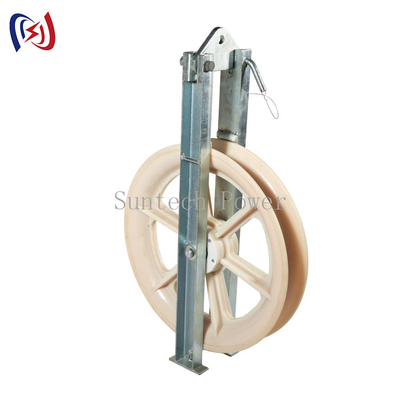
Bend boards excel in applications where the cable entry angle is relatively fixed and predictable, and where the cable passes through the opening only once (or infrequently). They are simpler, more durable, and lower-cost than roller-based solutions for these scenarios. For high-frequency cable movement (e.g., pulling multiple cables through the same opening), a pithead roller is preferred.
With proper selection — matching bend radius, material, and dimensions to your specific project — a protective bend board delivers decades of reliable service and eliminates one of the most common causes of cable jacket failure in underground installations.


 Your message must be between 20-3,000 characters!